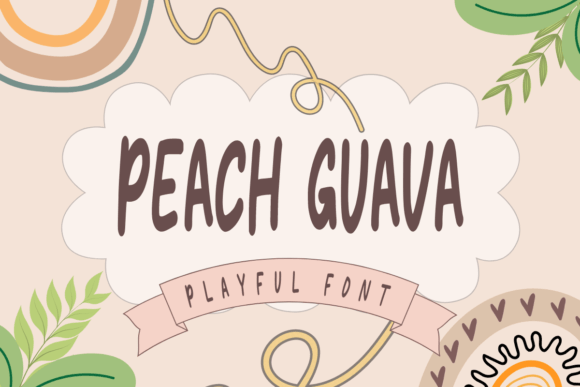
Peach Guava Display Font for Playful, Brand-Forward Web Design
Peach Guava is a Playful Display font that will make your designs look unique and fun — and as a web designer who ships high-conversion landing pages, SaaS dashboards, and boutique e-commerce sites, I reach for Peach Guava when I need typography that communicates warmth, approachability, and intentional charm without sacrificing digital clarity. It’s not a script or serif font — it’s a carefully crafted Display typeface built for impact at scale: bold enough for hero sections, expressive enough for branded quote cards, and versatile enough to anchor a full digital identity across websites, photos, packaging mockups, and social banners.
Peach Guava for Website Headers and Hero Sections That Convert
When your hero section has 3 seconds to earn attention, Peach Guava delivers visual distinction while preserving readability — especially at larger sizes on desktop and well-optimized responsive breakpoints on mobile. Its open letterforms and balanced x-height ensure legibility even over photo overlays or gradient backgrounds. I use Peach Guava exclusively for primary H1s in creative agency sites, coaching landing pages, and product launch campaigns — always pairing it with a neutral sans serif (like Inter or Manrope) for body copy and CTAs. This pairing creates immediate hierarchy: Peach Guava sets the tone; the sans serif builds trust and guides action.
Peach Guava for Online Store Packaging Mockups and Product Labels
For Shopify and WooCommerce stores selling artisan goods, natural skincare, or handmade stationery, Peach Guava elevates packaging design directly within browser-based mockups. Its playful yet refined character works beautifully on digital label previews, product cards, and “new arrival” banners — reinforcing brand personality before the customer even clicks “add to cart.” Because Peach Guava is a Display font, it shines at medium-to-large sizes (24px–64px), making it ideal for product name tags, ingredient callouts, and limited-edition badge text. Just avoid using it below 18px for body labels — stick to clean sans serifs there.
Peach Guava for Greeting Cards and Branded Email Campaigns
If you’re designing digital greeting cards, holiday email headers, or subscriber welcome graphics, Peach Guava adds instant warmth and human texture — no stock illustrations needed. Its rhythm and subtle bounce encourage scanning, not skimming, which lifts engagement in inbox previews and mobile-friendly HTML emails. I embed Peach Guava as a webfont via @font-face (WOFF2 format) for consistent rendering across Gmail, Apple Mail, and Outlook.com — and always include fallbacks like system-ui or -apple-system to preserve layout integrity where custom fonts fail.
Peach Guava for DIY Project Websites and Creative Portfolio Sites
Creative entrepreneurs launching portfolio sites — illustrators, ceramicists, candle makers, planners — consistently tell me they struggle to find Fonts that feel personal but still load fast and render cleanly across devices. Peach Guava solves that. Its playful energy reads as authentic, not gimmicky, especially when used sparingly: as section dividers (“Our Process”), project title accents (“Hand-Poured Soy Candles”), or animated hover states on gallery thumbnails. For responsive portfolios, I serve Peach Guava only on headings and decorative text — never body paragraphs — keeping LCP and CLS scores healthy.
Peach Guava for Quotes and Social Media Graphics on Websites
Blog posts, resource pages, and course sales pages thrive with well-placed quotes — and Peach Guava makes them stop-and-read moments. As a Display font, it performs best in short bursts: pull quotes, testimonial highlights, and stat callouts (e.g., “92% of customers reorder”). On light backgrounds, it pops with soft contrast; on dark mode, I adjust letter-spacing (+0.5px) and increase line-height slightly to maintain airiness. Bonus tip: Use Peach Guava in SVG inline for quote graphics embedded in blog content — ensures crisp rendering at any zoom level and zero FOIT.
Peach Guava for Branding Kits and Digital Templates Sold Online
If you’re a designer selling Canva templates, Notion brand kits, or Figma UI libraries, Peach Guava is a strategic addition to your Fonts collection. Its playful tone attracts lifestyle, wellness, and education niches — audiences actively searching for “fun display font” or “friendly branding font.” Include Peach Guava in your kit’s typography guide with clear usage rules: “Use for logo lockups, cover slides, and section headers only. Pair with Roboto or Open Sans for all interface text.” And always confirm commercial licensing covers client projects, SaaS platforms, and white-labeled digital products — Peach Guava’s license permits exactly that.
Peach Guava for Photos and Image Overlays in Modern Web Layouts
Overlaying text on hero images is risky — but Peach Guava’s generous spacing and strong stroke contrast make it one of the most reliable Display fonts for this use case. I test it against real photography: sunlit flat lays, muted lifestyle shots, and textured background images — and it consistently holds its own without heavy drop shadows or opaque overlays. For accessibility, I keep contrast ratios above 4.5:1 (using Peach Guava on #F5F0E6 over #2D231F works reliably), and I never set it smaller than 28px on desktop or 24px on mobile for image-based headlines.
Peach Guava for Posters, Banners, and Digital Ads with Brand Consistency
From Instagram story ads to homepage announcement banners (“Summer Sale Live!”), Peach Guava delivers instant recognition — especially when reused across touchpoints. Its distinct letter shapes (notice the friendly curve on the ‘g’ and open aperture of the ‘e’) become subtle brand signatures. For performance-critical banners, I pre-render Peach Guava text as optimized SVG rather than loading the full font file — cutting latency while preserving scalability. And because it’s a Display font designed for emphasis, I never use it for button labels or navigation menus — those stay lean, fast, and universally legible with system fonts.